
Drug License
A drug license is a legal permit issued under the Drugs and Cosmetics Act, 1940 that allows a person or business to manufacture, sell, distribute, or import medicines and cosmetics. It ensures that all drugs in the market are safe, genuine, and meet quality standards, and is usually valid for 5 years.
There are different types of licenses based on business activity, such as manufacturing, retail (medical store), wholesale, import/export, and loan license (using another company’s manufacturing unit). Retail and wholesale licenses are the most common for pharmacies and distributors.
The license is mandatory to run any pharma business legally in India. It is issued by authorities like the Central Drugs Standard Control Organisation and State Drug Control Departments.
Its main purpose is to protect public health, prevent fake medicines, ensure proper storage, and maintain accountability in the pharmaceutical sector. Without it, selling drugs is illegal and can lead to heavy penalties or imprisonment.

AYUSH License
An AYUSH License is a government permit required to manufacture, sell, or promote traditional medicines like Ayurveda, Unani, Siddha, and Homeopathy. It is issued under the Drugs and Cosmetics Act, 1940 to ensure product safety and quality.
It is essential for businesses to operate legally, build customer trust, and expand in the AYUSH market. Different types include manufacturing, loan, contract, and retail/wholesale licenses.
The license now has lifetime validity, but requires regular compliance like annual reports and GMP renewal. Without it, businesses may face heavy fines, legal action, or closure.
ISI Mark Registration
An ISI Mark is a quality certification issued by the Bureau of Indian Standards that shows a product meets Indian safety and quality standards. It is governed under the BIS Act, 2016 and is mandatory for many products like electrical goods, cement, and packaged water.
The ISI mark ensures consumer safety, product reliability, and legal compliance. It helps businesses build trust, improve market credibility, and legally sell regulated products in India.
To get ISI certification, manufacturers must follow Indian Standards, pass product testing, and undergo factory inspection by BIS. The license is usually valid for 1–2 years and requires regular renewal and inspections.
Without an ISI mark (where mandatory), businesses may face penalties, product bans, or legal action.

RCMC Registration
RCMC (Registration-cum-Membership Certificate) is a certificate issued by Export Promotion Councils (EPCs) or Commodity Boards in India. It proves that a business is a registered exporter under a government-approved body.
It is required to access export benefits like duty exemptions, incentives, and government schemes under the Foreign Trade Policy (FTP). To apply, you must have an Import Export Code (IEC).
The certificate is usually valid for 5 years and helps improve credibility, get financial support, and grow in international markets.

Petrol Pump License
A Petrol Pump License is official permission required to open and operate a fuel station that sells petrol and diesel. It ensures fuel is stored, handled, and sold safely under government rules.
In India, this license is obtained through Oil Marketing Companies like Indian Oil Corporation Limited, Bharat Petroleum Corporation Limited, and Hindustan Petroleum Corporation Limited, while safety approval is given by Petroleum and Explosives Safety Organization.
To get a license, you must meet eligibility criteria like age (21+), education (minimum 10th pass), financial capacity, and suitable land. You also need various approvals such as fire safety, pollution control, and local authority NOCs.
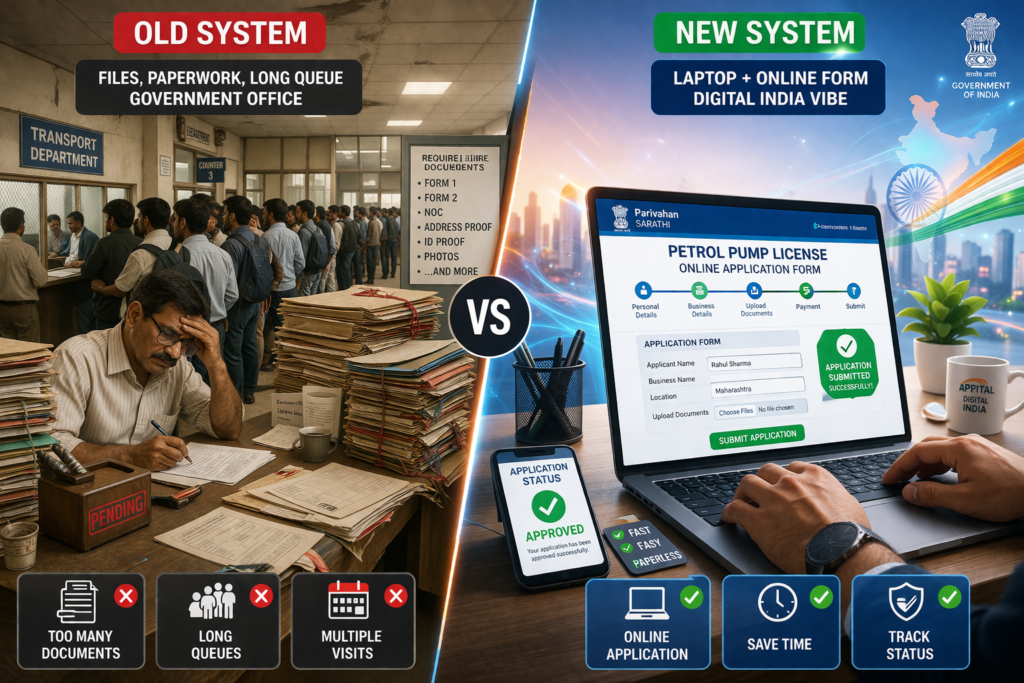
The application is done online when companies release advertisements, followed by selection, verification, and final approval.
In short, a petrol pump license allows you to legally run a fuel station while ensuring safety, quality, and compliance with government regulations.
SPICe+ Form for Company Registration
The SPICe+ Form (Simplified Proforma for Incorporating Company Electronically Plus) is an online form by the Ministry of Corporate Affairs (MCA) used to register companies in India quickly and easily.
It combines multiple registrations—like company incorporation, name approval, PAN, TAN, and other services—into a single form, making the process faster and simpler compared to earlier methods.
SPICe+ is used to register different types of companies such as Private Limited, OPC, Public Limited, Section 8, and Producer Companies. It has two parts: Part A for name approval and Part B for full company registration details.
Overall, SPICe+ helps entrepreneurs start a business with less paperwork, lower cost, and faster approval under the Companies Act, 2013.

Geographical Indication (GI) Registration
A Geographical Indication (GI) Tag is a sign used on products that come from a specific place and have special quality, reputation, or characteristics because of that location.
It helps consumers identify authentic products like Darjeeling Tea or Banarasi Sarees and ensures they are genuine.
GI tags are usually owned by a group of producers or associations, not individuals, and only authorized users from that region can use them.
In India, GI registration is governed by the Geographical Indications of Goods (Registration and Protection) Act, 1999, which provides legal protection against misuse.
Overall, a GI tag protects traditional products, boosts local economy, and builds consumer trust by guaranteeing origin and quality.
Tobacco License
A Tobacco License in India is a mandatory legal authorization required to manufacture, distribute, sell, or export tobacco products. It is issued by different authorities such as the Central Board of Indirect Taxes and Customs (CBIC), the Tobacco Board of India, or local municipal bodies under laws like the Cigarettes and Other Tobacco Products Act (COTPA), 2003. The type of license depends on your business activity—whether you are a manufacturer, retailer, wholesaler, or exporter. Having this license ensures that the business follows government regulations related to public health, safety, packaging, and sales restrictions. Operating without a valid tobacco license can result in heavy fines, cancellation of business operations, or legal action.

Liquor License
A Liquor License is a legal authorization issued by the state excise department that permits businesses such as bars, restaurants, hotels, clubs, or retail outlets to manufacture, sell, serve, or distribute alcoholic beverages in a lawful manner. This license ensures that the sale and consumption of alcohol are properly regulated, helping maintain public safety, prevent illegal activities, enforce age restrictions, and generate significant revenue for the government through taxes and duties. Depending on the type of business and its operations, different categories of licenses are granted, such as for on-premises consumption (like bars and hotels) or off-premises sales (like liquor shops), each with specific conditions, compliance requirements, and validity periods that must be strictly followed to operate legally.

FIEO Registration
FIEO (Federation of Indian Export Organisations) is an apex trade promotion body established by the Government of India to support and promote Indian exports across global markets. It acts as a vital link between exporters, the government, and international buyers by providing guidance, market intelligence, training, and access to global trade opportunities. FIEO also helps businesses obtain the Registration-cum-Membership Certificate (RCMC), which is important for availing government export benefits and schemes. By representing exporters’ interests in policy-making and offering platforms like trade fairs and buyer-seller meets, FIEO plays a crucial role in helping Indian businesses—especially MSMEs—expand internationally and succeed in global trade.

Professional Tax Registration
Professional Tax Registration is a mandatory process where employers, businesses, and self-employed individuals register with the state’s Commercial Tax Department to comply with professional tax laws, which are governed by state-specific regulations under Article 276 of the Constitution of India. It enables employers to deduct professional tax from employees’ salaries and deposit it with the government (PTRC), while self-employed professionals and entities pay their own tax liability (PTEC). This registration ensures legal compliance, proper tax collection, and timely payment, helping state governments generate revenue and regulate professions, trades, and employment activities.

Factory License Registration
A Factory License is a legal authorization granted by the government that permits a business to establish and operate a manufacturing unit in compliance with laws such as the Factories Act, 1948. It ensures that the factory follows all necessary safety standards, labor laws, health measures, and environmental regulations to protect workers and maintain safe working conditions. This license is mandatory for factories employing a specified number of workers with or without power, and it involves approvals, inspections, and clearances from various authorities. Operating without a valid factory license is illegal and can result in heavy fines, penalties, or even closure of the business, making it a crucial requirement for any industrial or manufacturing activity.
Network License
A Network License is a mandatory legal authorization issued by the Government of India, primarily through the Department of Telecommunications (DoT) under the Ministry of Communications, that permits a company to establish, operate, and provide telecom, internet, broadcasting, or wireless communication services across a defined geographical area. This license clearly outlines the scope of services, operational boundaries, and strict technical, financial, and regulatory conditions that the company must comply with, ensuring efficient use of resources like radio spectrum, protection of consumer interests, data security, and adherence to national laws, while enabling businesses to legally expand their communication services and participate in India’s digital and telecom ecosystem.

ISSN Number Registration
An ISSN (International Standard Serial Number) is an 8-digit unique identification code assigned to serial publications such as journals, magazines, newspapers, and other periodicals, which enables publishers, libraries, researchers, and digital indexing systems to accurately identify, classify, catalog, and manage these publications at an international level, ensuring seamless accessibility, proper citation, and efficient tracking, while eliminating confusion caused by similar or changing titles and significantly enhancing the publication’s visibility, authenticity, and recognition in the global academic and publishing ecosystem.

Good Manufacturing Practices (GMP) Certification
GMP (Good Manufacturing Practice) Certification in India is a quality assurance system that ensures products like medicines, food, cosmetics, and supplements are manufactured safely, consistently, and in compliance with legal standards. It requires businesses to maintain clean and hygienic facilities, use appropriate equipment, train employees properly, and follow strict production and quality control procedures at every stage. By implementing GMP guidelines, companies can reduce errors, prevent contamination, and ensure that every batch of products meets the required quality standards. This certification not only helps in building strong customer trust and brand reputation but also ensures compliance with government regulations, supports participation in tenders, and is often essential for exporting products to international markets.

Medical Device Registration
Medical Device Registration in India is the process of obtaining official approval from the Central Drugs Standard Control Organization (CDSCO) to manufacture, import, or sell medical devices legally. It ensures that devices meet required safety and quality standards, protecting patients and building trust among doctors and hospitals. Under the Medical Devices Rules, 2017 and updated regulations, all devices must be classified by risk and approved through the SUGAM portal. This registration is mandatory, helps avoid legal penalties, ensures compliance with Indian laws, and enables businesses to operate, grow, and access both domestic and global markets

PTEC Registration
PTEC (Professional Tax Enrollment Certificate) is a mandatory registration for individuals, professionals, freelancers, and business owners to pay professional tax on their own income under state laws. It is issued by the respective State Government Tax Department and applies even if there are no employees. This registration ensures legal compliance, helps avoid penalties, and allows smooth business operations. It also serves as proof of tax compliance, which is often required for opening bank accounts, obtaining licenses, GST registration, and participating in government tenders. PTEC is especially important in states like Maharashtra, Karnataka, and West Bengal, where professional tax is actively enforced.

ICEGATE Registration
ICEGATE (Indian Customs Electronic Gateway) is the official online portal of Indian Customs that enables importers, exporters, and other trade participants to file documents and manage customs processes digitally. Managed by the Central Board of Indirect Taxes and Customs, it allows users to submit shipping bills, bills of entry, pay customs duties online, and track shipment status in real time. ICEGATE registration is essential for businesses involved in international trade, as it ensures faster clearance, better compliance, reduced paperwork, and seamless communication with customs authorities, making import-export operations more efficient and transparent.
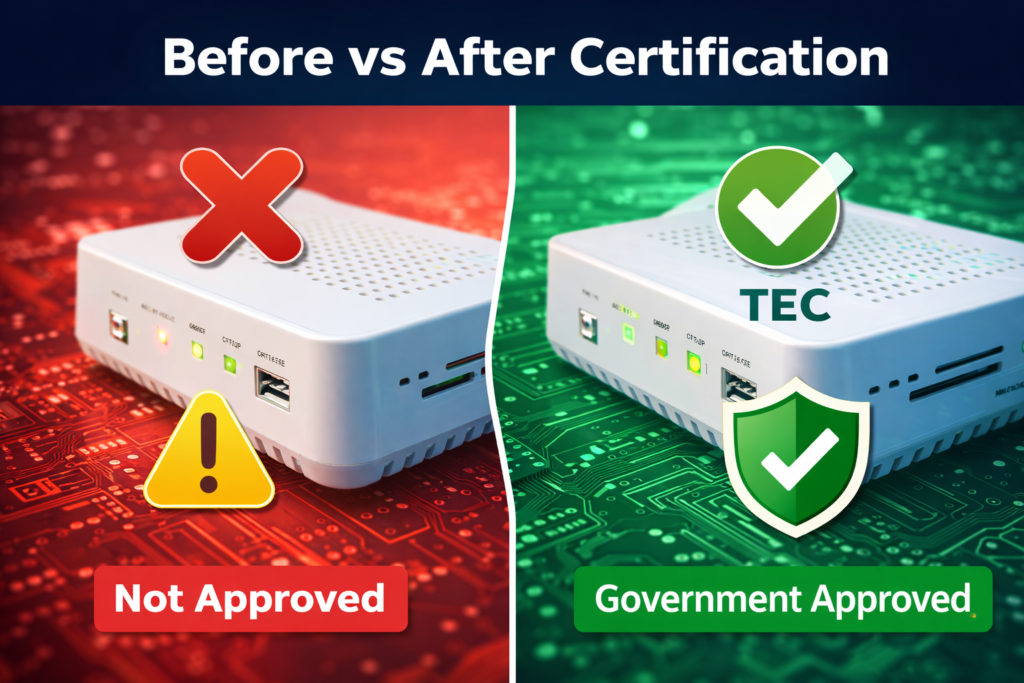
TEC Certificate Registration
TEC Certification is a mandatory approval issued by the Telecommunication Engineering Centre under the Department of Telecommunications (DoT), Government of India, for telecom and ICT equipment. It ensures that products such as routers, modems, IoT devices, and other telecom equipment meet essential safety, quality, and technical standards before they can be legally manufactured, imported, or sold in India. This certification is part of the MTCTE framework, which helps maintain reliable telecom networks, protects national security, and ensures smooth communication systems. By obtaining TEC certification, businesses not only comply with legal requirements and avoid penalties but also enhance product credibility, improve market acceptance, and gain access to government tenders and larger business opportunities.

DUNS Number Registration
A DUNS Number (Data Universal Numbering System) is a unique nine-digit identification number issued by Dun & Bradstreet to identify and verify businesses globally. It acts as a universal business identity, allowing companies to establish credibility and build trust with banks, suppliers, investors, and government agencies. In India, a DUNS Number is important for accessing international markets, securing funding, applying for global tenders, and registering on platforms like Apple Developer and Google Play. It also helps organizations evaluate your company’s financial stability and reliability, making it easier to form partnerships, gain contracts, and expand your business worldwide.

ISBN Number Registration
An ISBN (International Standard Book Number) is a unique 13-digit code that acts as a global identifier for books and published materials, helping publishers, libraries, and retailers easily track, manage, and distribute each title. In India, ISBNs are issued free of cost by the Raja Rammohun Roy National Agency under the Ministry of Education, ensuring that every book—whether print or digital—gets official recognition in national and international markets. Each format or edition of a book, such as paperback, hardcover, or eBook, requires a separate ISBN, making it easier to distinguish, catalog, and monitor sales across platforms. Although not legally mandatory, having an ISBN significantly improves a book’s visibility, credibility, and accessibility, especially on platforms like Amazon and in libraries. It also simplifies inventory management, sales tracking, and global distribution. In today’s digital publishing era, an ISBN works like a “digital fingerprint” for your book, ensuring it stands out and remains identifiable in the vast global publishing ecosystem.

ISO 50001 Certification
ISO 50001 Certification is an international standard developed by the International Organization for Standardization that helps organizations establish a structured Energy Management System (EnMS) to monitor, control, and continuously improve their energy usage. First introduced in 2011 and updated in 2018, it enables businesses to reduce energy costs, enhance efficiency, and lower environmental impact by following the systematic Plan-Do-Check-Act (PDCA) approach. Rather than being issued by ISO itself, the certification is granted by accredited third-party bodies, which in India are approved by the National Accreditation Board for Certification Bodies under the Quality Council of India. ISO 50001 demonstrates that a company is committed to sustainable energy practices, regulatory compliance, and continuous improvement, making it highly valuable for industries, commercial establishments, and organizations aiming to optimize energy performance while building credibility and long-term cost savings.
ISO 27001 Certification
ISO 27001 Certification is an internationally recognized standard developed by the International Organization for Standardization that provides a structured framework for establishing, implementing, and maintaining an Information Security Management System (ISMS). It helps organizations protect sensitive data by ensuring confidentiality, integrity, and availability while identifying risks and applying appropriate security controls. Although voluntary, it is widely adopted by businesses in India to align with regulations like the Digital Personal Data Protection (DPDP) Act, 2023 and global standards such as GDPR. Certification is issued by accredited third-party bodies, often approved by the National Accreditation Board for Certification Bodies, ensuring credibility and global acceptance. Achieving ISO 27001 demonstrates a company’s strong commitment to data security, regulatory compliance, and risk management, helping build trust with clients, partners, and stakeholders while safeguarding against increasing cyber threats and data breaches.
ISO 31000 Certification
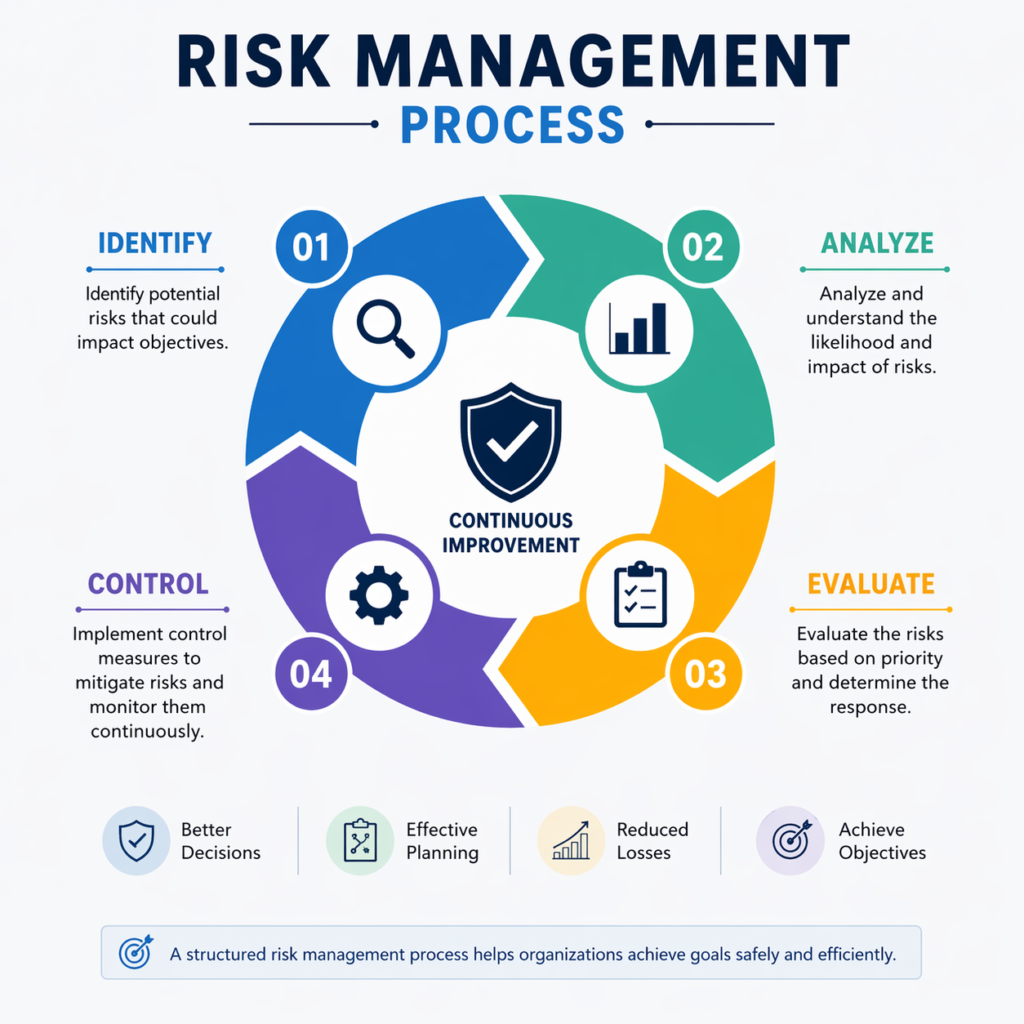
ISO 31000 is an international standard that provides a structured framework and guidelines for effective risk management across all types of organizations and industries. It helps businesses systematically identify, analyze, evaluate, and control risks that may impact their objectives, whether those risks are potential threats or valuable opportunities. Unlike certifiable ISO standards, ISO 31000 is not used for certification but serves as a practical guide to strengthen decision-making, improve planning, and build a strong risk-aware culture within the organization. By adopting ISO 31000 principles, businesses can minimize uncertainties, enhance operational efficiency, ensure compliance with laws and regulations, and achieve sustainable growth with greater confidence and stability.

ISO 14001 Certification
ISO 14001 Certification is an internationally recognized standard for Environmental Management Systems (EMS) developed by the International Organization for Standardization. It provides a structured framework that helps organizations identify, manage, monitor, and control their environmental impact, such as waste generation, energy use, emissions, and resource consumption. By implementing ISO 14001, businesses can improve environmental performance, ensure compliance with legal requirements, and promote sustainable practices across their operations. Although certification is voluntary, it enhances credibility, supports global business opportunities, reduces operational costs, and demonstrates a strong commitment to environmental responsibility and continuous improvement.

ISO 9001 Certification
ISO 9001 Certification is an internationally recognized standard for Quality Management Systems (QMS) developed by the International Organization for Standardization. It provides a structured framework that helps businesses improve product and service quality, streamline processes, reduce errors, and consistently meet customer expectations. By implementing ISO 9001:2015, organizations can enhance operational efficiency, make data-driven decisions, and build a culture of continuous improvement. Although certification is voluntary, it significantly boosts credibility, increases customer satisfaction, and opens doors to new business opportunities in both domestic and international markets.

ISO 22000 Certification
ISO 22000 Certification is an international food safety standard that provides a framework for a Food Safety Management System (FSMS), enabling businesses across the food chain—from farms to restaurants—to ensure their products are safe, hygienic, and compliant. It follows a risk-based approach using HACCP principles, where hazards are identified and controlled to reduce the risk of contamination, food-borne illnesses, and product recalls. In India, this certification supports compliance with Food Safety and Standards Authority of India regulations and is issued by bodies accredited by National Accreditation Board for Certification Bodies. Achieving ISO 22000 enhances business credibility, opens export opportunities, strengthens internal processes, and builds customer trust. The certification process includes gap analysis, documentation, implementation, audits, and final approval, and the certificate is valid for three years with mandatory annual surveillance audits to maintain compliance.

ISO Certification
ISO Certification is an internationally recognized process that proves a business follows global standards for quality, efficiency, safety, or data security. It is developed by the International Organization for Standardization and focuses on certifying a company’s management system—not its products. This means the organization has well-defined processes to consistently deliver quality results and meet customer expectations. Achieving ISO certification enhances credibility, builds trust with clients, improves operational efficiency, and opens doors to new business opportunities and tenders. The process includes gap analysis, documentation, implementation, internal and external audits, and certification, with the certificate typically valid for three years and maintained through regular surveillance audits.