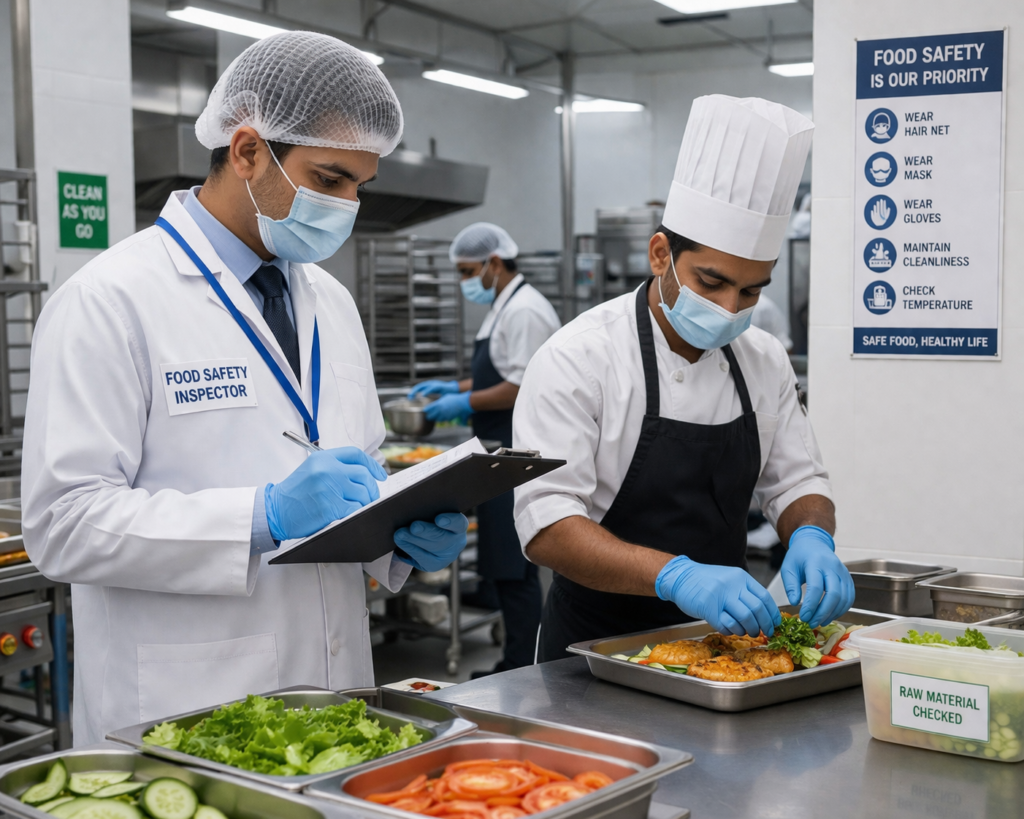
FSSAI Registration
Food Safety and Standards Authority of India (FSSAI) License Registration is a mandatory legal approval required to operate any food-related business in India. It ensures that the business complies with government standards for food safety, hygiene, and quality, helping to provide safe and reliable food to consumers. Whether you are involved in manufacturing, processing, packaging, storing, transporting, or selling food, obtaining FSSAI registration is compulsory.
There are three types of FSSAI registration in India—Basic Registration (for small businesses with turnover up to ₹12 lakh), State License (for medium businesses with turnover between ₹12 lakh and ₹20 crore), and Central License (for large businesses with turnover above ₹20 crore or those operating across multiple states or involved in import-export). This license not only ensures legal compliance but also enhances customer trust, improves brand credibility, and supports overall business growth in the competitive food industry.

FSSAI Product Approval
Food Safety and Standards Authority of India (FSSAI) Product Approval is required for “non-specified” or innovative food products that are not covered under existing food safety standards in India. This includes foods with new ingredients, additives, unique formulations, novel technologies, or imported items that do not match Indian regulations. Before selling such products, businesses must apply online by submitting complete details like ingredients, manufacturing process, safety test reports, nutritional information, and labeling. FSSAI experts review the application and may conduct testing before granting approval.
This approval ensures that the product is safe for consumption and complies with national food safety laws. It also provides legal authorization to sell the product in India, builds customer trust, enhances brand credibility, and allows businesses to expand across markets without legal risks. Without FSSAI product approval, selling such food items can lead to heavy penalties, business closure, or legal action, making it a crucial step for startups and food businesses launching new or unique products.
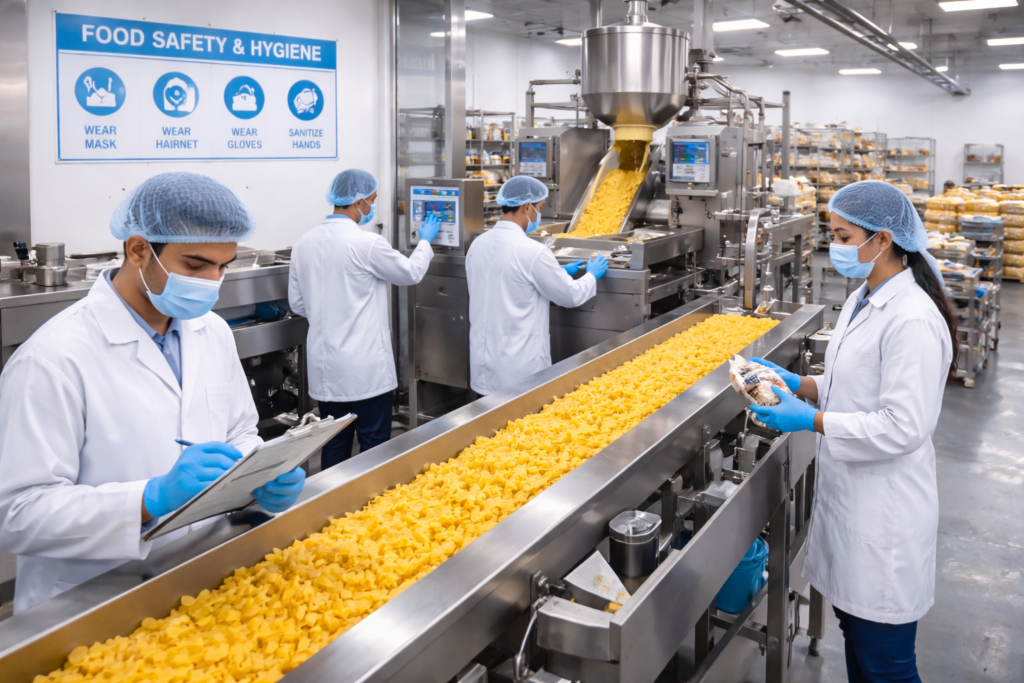
FSSAI Central License
Food Safety and Standards Authority of India FSSAI Central License is a mandatory approval for large-scale food businesses in India, especially those operating in multiple states, involved in import/export, or having an annual turnover above ₹20 crore. It is issued by the Central Licensing Authority and ensures that food products meet strict safety, hygiene, and quality standards before reaching consumers. This license is valid for 1 to 5 years and includes a unique 14-digit FSSAI number that must be printed on all food packages, labels, and displayed at the business premises.
Having an FSSAI Central License not only helps businesses stay legally compliant under food safety laws but also boosts brand credibility, builds strong customer trust, and enhances market reputation. It opens doors to nationwide operations, international trade, and large business opportunities, making it essential for companies aiming for growth and expansion in the food industry.
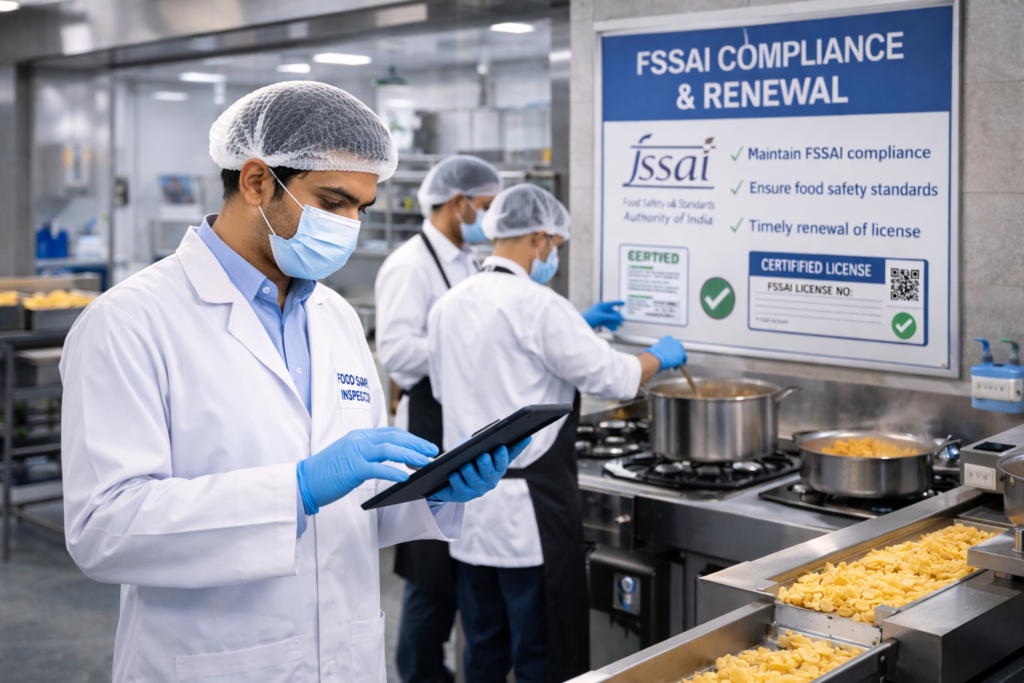
FSSAI License Renewal
Food Safety and Standards Authority of India (FSSAI) License Renewal is a crucial process for every food business in India to continue operating legally and maintain compliance with food safety and hygiene regulations. Every Food Business Operator (FBO) must renew their existing Basic, State, or Central license before its expiry, ideally 30–60 days in advance, through the FoSCoS portal. Timely renewal ensures uninterrupted business operations, helps avoid heavy penalties (₹100 per day), and prevents legal actions or business closure.
In addition, renewing your FSSAI license maintains customer trust, ensures consistent food quality standards, and strengthens your brand credibility in the market. It is a simple yet important step to keep your business compliant, competitive, and legally secure in the growing food industry.
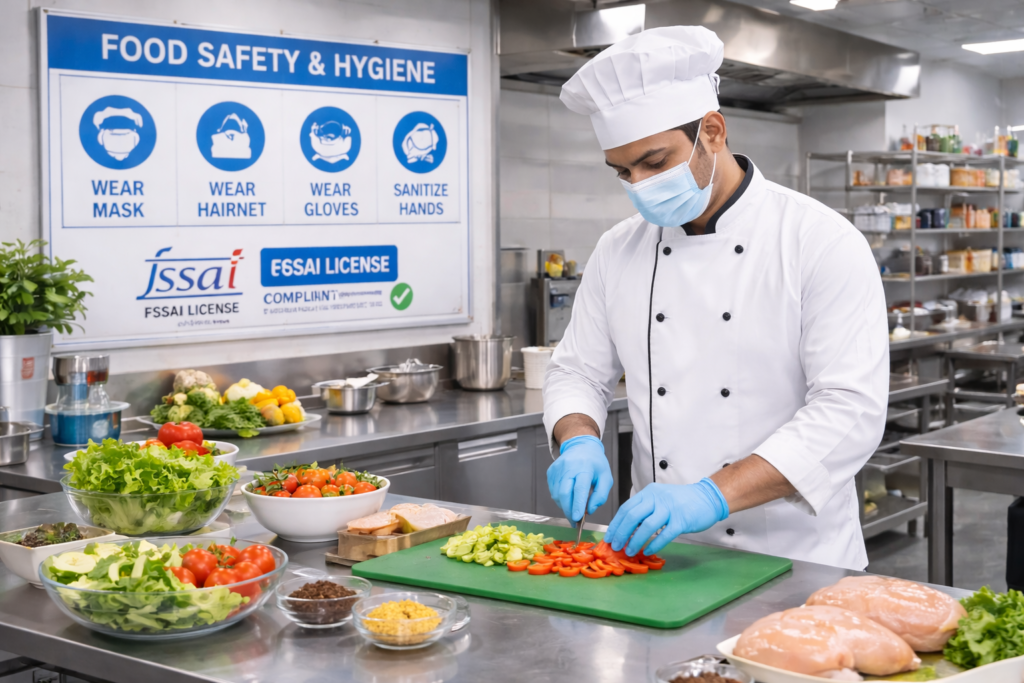
FSSAI State License
Food Safety and Standards Authority of India (FSSAI) State License is a mandatory food safety permit required for medium-sized food businesses operating within a single state in India, generally with an annual turnover between ₹12 lakh and ₹20 crore. It is issued to businesses such as restaurants, food manufacturers, distributors, storage units, caterers, and transporters, ensuring they comply with government standards for food safety, hygiene, and quality.
This license not only helps businesses operate legally but also builds customer trust, enhances brand credibility, and improves overall business efficiency. By following FSSAI guidelines, businesses can maintain proper food handling practices, reduce risks of contamination, and avoid legal penalties. Additionally, having a State License makes it easier to expand operations within the state, collaborate with suppliers and partners, and grow in the competitive food industry while delivering safe and high-quality food to consumers.
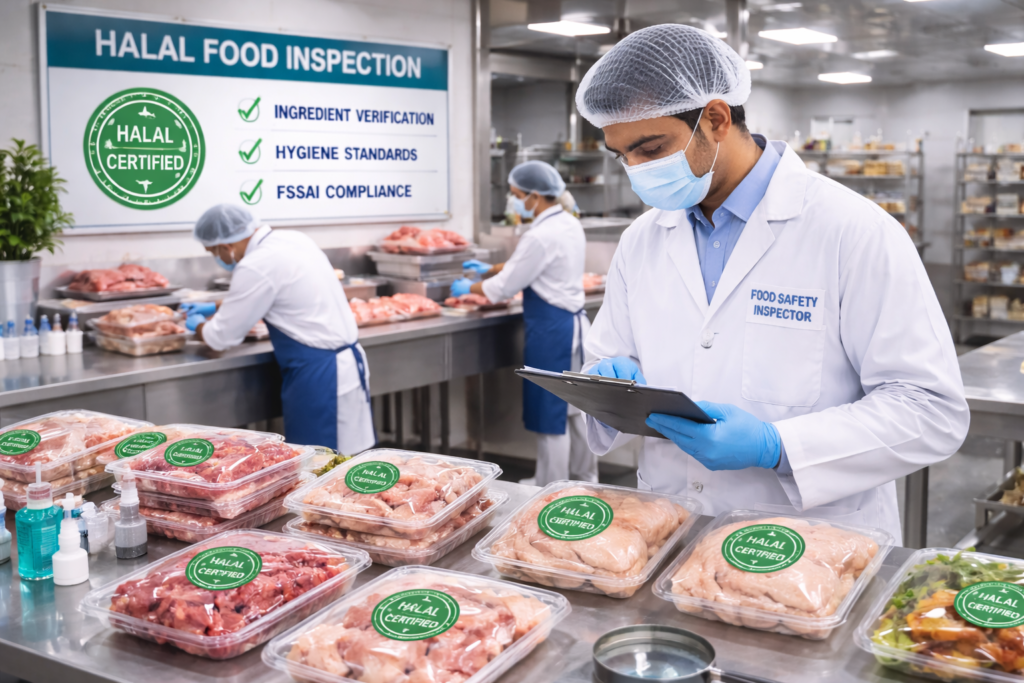
Halal Certification
Halal Certification is a process that verifies whether a business’s products or services comply with Islamic dietary and lifestyle laws. In India, it is issued by authorized Islamic organizations and ensures that food, cosmetics, pharmaceuticals, and other products are free from prohibited (haram) substances like pork and alcohol, prepared using hygienic methods, and handled according to approved Halal guidelines. It also confirms that animals, if used, are slaughtered as per Islamic practices and that there is no cross-contamination with non-Halal items.
Although India does not have a single central law for Halal certification, it is widely recognized and valued, especially by exporters and food businesses. Obtaining Halal certification helps build strong trust among Muslim consumers, enhances brand credibility, and opens doors to global markets, particularly in Middle Eastern and Southeast Asian countries. It also reflects a business’s commitment to quality, ethical practices, and proper hygiene standards, making it beneficial beyond just religious compliance.